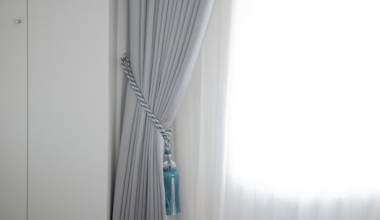
Why Accurate Measurements Matter for Custom Sheer Curtains
Custom sheer curtains transform a room with soft, diffused light and an airy feel. But even the most luxurious fabric won't look right if the measurements are off. A common mistake is ordering curtains that are too short or too narrow, leaving awkward gaps that ruin the intended effect. precise measurements ensure a polished, professional look that maximizes both aesthetics and functionality. In this guide, we'll walk you through every step of measuring for custom sheer curtains, from choosing the right mounting style to calculating fabric fullness. Whether you're a DIY enthusiast or working with an interior designer, these tips will help you get it right the first time.
Tools You'll Need
Before you start, gather these measuring essentials:
- Steel measuring tape (fabric tapes can stretch)
- Pencil and notepad or digital note app
- Step ladder (for tall windows)
- Level (to check if the window is square)
- Calculator (for determining fabric width and length)
Always measure to the nearest 1/8 inch (3 mm) for best accuracy. Write down each measurement immediately to avoid forgetting.
Step 1: Decide on Mounting Type
Your measurement method depends on whether you're mounting the curtain rod inside or outside the window frame. Inside mount creates a clean, built-in look; outside mount allows you to make the window appear larger and block more light. For custom sheers, outside mount is often preferred because it gives maximum light control and a fuller appearance.
Inside Mount
Inside mount means the curtain rod and hardware fit inside the window casing, leaving the frame exposed. This requires precise width measurements so the curtains don’t scrape the sides.
Outside Mount
Outside mount places the rod above and beyond the window frame. This is the most common choice for sheers because it allows curtains to stack back completely, revealing the entire window when open.
Step 2: Measure the Width
Width measurement determines how wide your curtain panels need to be. For inside mount:
- Measure the inside width of the window frame at three points: top, middle, and bottom.
- Use the narrowest measurement (usually the top) as your final width.
- Subtract 1/2 inch (12 mm) to allow clearance for the fabric to move freely without rubbing against the frame.
For outside mount:
- Measure the width of the window frame, then add at least 8 to 12 inches (20–30 cm) on each side. This allows the curtains to stack off the glass when open, making the window look wider.
- For a dramatic effect, you can add up to 20 inches (50 cm) per side.
- Always round up to the nearest even number for easier fabric cutting.
Step 3: Measure the Length
Length measurement affects how the curtains hang – whether they kiss the floor, puddle slightly, or hover above the sill. For custom sheers, the most popular option is floor-length, ending ½ inch (12 mm) above the floor to avoid dust accumulation and tripping hazards.
Floor-Length with Inside Mount
For inside mount floor-length, measure from the top inside of the frame down to ½ inch above the floor. If you want a sill-length curtain, measure from the top inside to ½ inch above the sill.
Outside Mount with Floor-Length
For outside mount, your starting point is where you plan to place the rod. Typically, the rod is installed 4–6 inches (10–15 cm) above the window frame. Measure from the desired rod position straight down to ½ inch above the floor. For a puddle effect (elegant pool of fabric on floor), add 2–4 inches (5–10 cm) to the length.
Always measure in three spots: left, center, and right. Floors and ceilings are often uneven, so use the longest measurement if you want perfect floor clearance. However, if you prefer a uniform hem, take the average and adjust with hems later.
Step 4: Account for Hanging Style
The way you plan to hang the curtains affects both width and length. Common styles for sheer curtains include:
- Rod pocket (casual, with a sewn-in pocket for the rod)
- Grommet top (modern, with metal rings)
- Pleated (formal, with pinch or knife pleats)
- Clip rings (versatile, with clips attached to the fabric)
For rod pocket curtains, add 2 inches (5 cm) to the length for the pocket and heading (the ruffle above the rod). For grommet tops, measure from the top of the rod to the desired hem; grommets usually sit directly on the rod, so no extra length is needed. For pleated or clip-ring styles, account for the ring height or pleat structure.
Step 5: Calculate Fabric Fullness
Sheer curtains look best when they have plenty of fabric. Fullness is the ratio of fabric width to the actual width of the window (or the rod width). A common ratio for sheers is 2:1 or even 3:1 to achieve that soft, billowy look. For example, if your rod width is 60 inches, you’ll need 120–180 inches of fabric width (before hemming).
To calculate the amount of fabric to order:
- Multiply the rod width by the fullness ratio (e.g., 2.5 for medium fullness).
- Add 6–8 inches (15–20 cm) for side hems (3–4 inches per side).
- This gives you the total fabric width needed.
- Divide by the fabric width per panel (usually 54 or 60 inches) to determine how many panels you need.
- Round up to the nearest whole number.
Step 6: Special Considerations for Sheer Fabrics
Sheer fabrics like voile, linen, and polyester blends are lightweight and often semi-transparent. Because they're delicate, avoid pulling the tape too tight when measuring. Also, sheer curtains tend to shrink slightly after washing, so pre-wash the fabric before cutting if you plan to launder them. Alternatively, order extra length to allow for hemming adjustments post-wash.
If you're using a sheer with a pattern (e.g., embroidered or printed), allow extra fabric for pattern matching at the seams. This can add 10–20% to your fabric requirement.
Common Mistakes to Avoid
- Measuring only once: Always remeasure to confirm.
- Forgetting to account for hardware: The rod diameter and brackets affect the final curtain position.
- Ignoring obstructions: Radiators, window cranks, or furniture can interfere with the curtain fall.
- Using a tape measure that is too flexible: Metal tape is best for accuracy.
- Assuming all windows are square: Many are not, so measure multiple points.
Final Checklist Before Ordering
| Item | Check |
|---|---|
| Mounting type (inside/outside) | Decided |
| Rod width | Measured |
| Curtain length from rod to floor | Measured in 3 places |
| Fullness ratio selected | 2x or 3x |
| Hem allowances included | Yes |
| Pattern matching extra fabric | If applicable |
| Pre-wash fabric | Planned |
By following these steps, you'll ensure your custom sheer curtains fit perfectly and look beautiful. Remember, measuring correctly is the foundation of a successful curtain project – take your time, double-check numbers, and don't hesitate to consult a professional if you're unsure.