Why Acoustic Curtains Matter in Your Home Theater
Whether you’re building a dedicated cinema room or upgrading your living room setup, sound quality is just as important as picture quality. Acoustic curtains are a crucial yet often overlooked element that can dramatically improve your audio experience. They absorb excess reverberation, reduce echo, and block outside noise, allowing you to hear every whisper and explosion with clarity. But acoustic curtains don’t have to be boring—they come in a range of styles, colors, and materials that complement your decor while enhancing sound performance.
How Acoustic Curtains Work: The Science of Sound Absorption
Sound waves bounce off hard surfaces like walls, floors, and windows, creating echoes and muddying audio. Acoustic curtains are made from dense, multi-layer fabrics that trap and dissipate these waves. The key is the material’s mass and texture: thicker fabrics like velvet or heavy polyester blends absorb mid to high frequencies, while specialized acoustic felts or mass-loaded vinyl layers block lower frequencies. Many acoustic curtains also feature a backing layer—often a blackout liner—that adds mass and prevents sound from passing through.
Key Acoustic Parameters to Look For
- Noise Reduction Coefficient (NRC): The industry standard for sound absorption. Look for NRC 0.50 or higher for effective home theater use.
- Sound Transmission Class (STC): Measures how much sound is blocked. An STC rating of 25+ is good for interior doors; curtains typically have lower STC but still help reduce flanking noise.
- Fabric Weight: Heavier fabrics (300+ gsm) absorb more sound. Velvet and triple-weave polyester are excellent choices.
- Pleating Style: Accordion or ripple folds increase surface area, boosting absorption compared to flat panels.
Style Meets Acoustics: Fabric Choices for Home Theater
Your home theater should feel immersive from the moment you walk in. The right curtain fabric not only improves sound but also sets the mood. Here are the top fabric categories to consider:
Velvet Acoustic Curtains
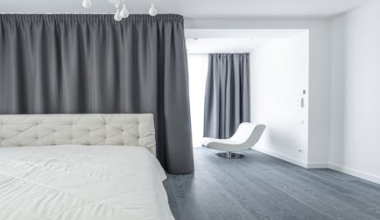
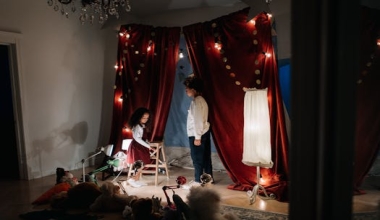
Velvet is a classic choice for home theaters because of its rich, dark appearance and dense pile that traps sound. It offers an NRC of up to 0.60 when properly lined. Velvet also has a luxurious drape that blocks light completely, making it ideal for a blacked-out cinema experience. Choose dark tones like charcoal, navy, or burgundy to minimize reflection and keep the focus on the screen.
Sheer Acoustic Curtains
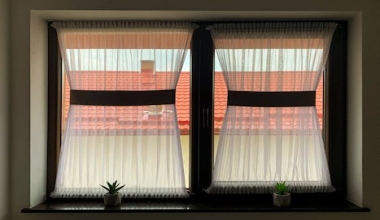
Sheer fabrics are lightweight and allow some light to pass through, but when layered over a blackout or acoustic liner, they can still contribute to sound absorption. They work best in multi-purpose rooms where you want to soften echoes without making the space feel closed in. Use sheers as an outer layer and heavier drapes as an inner layer for flexible control of both light and sound.
Blackout Acoustic Curtains
Blackout curtains are designed to block 100% of external light, but many also incorporate acoustic linings. The triple-weave construction (two layers of fabric with a dense inner core) provides excellent sound absorption while eliminating light leaks. They are a practical all-in-one solution for home theaters that double as living spaces.
Practical Tips for Installing Acoustic Curtains in Your Home Theater
- Cover the entire wall behind the screen: This prevents sound from reflecting off the back wall and interfering with your front speakers.
- Extend curtains beyond the window frame: Mount the rod 6 to 12 inches above the window and make the panels wide enough to cover the sides. This seals sound leaks around the edges.
- Use floor-length panels: Curtains should touch or pool slightly on the floor to avoid sound escaping under them.
- Layer with acoustic panels: For optimal performance, combine acoustic curtains with foam panels or bass traps in corners.
- Choose double-rod systems: This allows you to hang a sheer layer for daily ambiance and a heavy acoustic layer for movie time.
Comparative Table: Acoustic Curtain Fabric Options
| Fabric Type | NRC Rating | Light Blocking | Style Appeal | Best Use |
|---|---|---|---|---|
| Velvet | 0.55–0.65 | 95–100% | Luxurious, rich | Dedicated theater |
| Blackout Polyester | 0.50–0.60 | 100% | Modern, sleek | Multi-purpose rooms |
| Acoustic Wool Blend | 0.60–0.70 | 85–95% | Natural texture | Audio-critical spaces |
| Sheer with Liner | 0.30–0.45 | Low to moderate | Airy, soft | Layered setups |
Industry Application Cases: Real-World Home Theaters
Case Study 1: Small Apartment Living Room Theater
A 12’×14’ room with hardwood floors and a large window created a slap echo issue. We installed full-length blackout velvet curtains on a ceiling-mounted track covering the entire back wall. The NRC improved from 0.30 to 0.55, and the client reported clearer dialogue and less listener fatigue during movies. The curtains also served as a decorative focal point.
Case Study 2: Professional Home Cinema (Dedicated Room)
A 20’×16’ room with acoustic panels on the side walls needed absorption behind the projection screen. We used a custom acoustic wool blend fabric with a mass-loaded vinyl layer for the main curtain. The result: RT60 (reverberation time) dropped from 0.8s to 0.4s, achieving THX recommendations. The client combined the curtains with motorized blackout shades for absolute light control.
Case Study 3: Multi-Use Great Room
A family wanted a theater experience without sacrificing natural light. We installed a double-rod system with sheer acoustic curtains (daytime) and blackout acoustic curtains (nighttime). The sheers reduced echo by 30% while letting in soft daylight. The heavy curtains delivered full absorptive power for movie nights. This hybrid approach maintained style and functionality.
Care and Maintenance of Acoustic Curtains
To preserve both the acoustic properties and appearance of your curtains:
- Vacuum regularly: Use a brush attachment to remove dust from the fabric. Do not use a beater bar as it may damage the backing.
- Spot clean only: Most acoustic curtains are not machine washable. Use a mild detergent and a damp cloth for stains.
- Professional dry cleaning: Once a year, have the curtains professionally cleaned, especially if they are velvet or have a bonded acoustic liner.
- Avoid direct sunlight: UV rays can degrade the acoustic backing over time. Use shades or lined curtains to protect them.
- Check pleats and mounting hardware: Ensure the curtains hang evenly and that the rod supports the weight. Sagging can reduce sound absorption.
Frequently Asked Questions
Are acoustic curtains the same as blackout curtains?
Not exactly. All acoustic curtains are not blackout, and many blackout curtains are not acoustic. Look for products specifically rated for sound absorption (NRC) if acoustics are your priority. You can also layer a blackout curtain with an acoustic liner.
How many acoustic curtains do I need for a home theater?
Cover at least 30% of the total wall and window surface area for noticeable improvement. For best results, cover the entire wall behind the screen and the side walls near the listening position.
Can I install acoustic curtains myself?
Yes, but ensure the curtain rod is firmly anchored into studs or use heavy-duty toggle bolts. Acoustic curtains are heavier than standard drapes. A professional installer can ensure a finished look and proper sound sealing.
Conclusion: The Perfect Marriage of Style and Sound
Acoustic curtains are an affordable and stylish upgrade for any home theater. By choosing the right fabric, installation method, and layered approach, you can significantly enhance your audio environment while making a design statement. Whether you prefer the opulence of velvet or the versatility of blackout polyester, there is an acoustic curtain that fits your vision. Start by measuring your space, identifying your acoustic needs, and then select a fabric that complements your decor. Your ears—and your movie-watching experience—will thank you.